

SHAPING TRADITIONS
SHAPING TRADITIONS
← Back to the workshop schedule
Editor’s note · August 2026
This interview was originally published on 25 January 2025. Since then, Amelia Aquino (1927–2025) has passed away, La Comalita has opened in Ixtlán, and the workshops have reached 36 cities across six countries. The documentary Amelia: Tesoros vivos del barro has also been shown in Mexico and abroad. Some references to Hyères and plans for 2025 reflect the moment in which the conversation took place.
Clay comes to life in the hands of Iván Monroy Roesch, revealing stories steeped in Mexican traditions and humanity. Trained at the heart of Zapotec culture, this ceramic artist now carries forward and reimagines this heritage in France, where he shares his craft with passion.
How did pottery become your passion, and what motivated you to make it your profession?
I am originally from Monterrey, Mexico, and my artistic journey began in Oaxaca, a region renowned for its wealth of artisanal traditions. It was there that I discovered pottery, an art that, like many Mexican crafts, seeks the perfect balance between the useful and the beautiful.
For me, pottery goes beyond the simple making of objects; it is a way to explore our humanity and to create a dialogue between past and present. This vision took shape during my apprenticeship with Amelia Aquino, a Zapotec master potter, now 97 years old, who welcomed me into her studio with incredible generosity. I immersed myself in Zapotec culture, learning to shape clay at her side. Over the course of that experience, I understood that pottery is not limited to creating objects, but embodies a way of life in itself, passed down from generation to generation. Each piece shaped and each gesture made answers a timeless need, revealing the deep harmony between the object created and our existence. This realization transformed my artistic practice, leading me to explore new forms of expression where aesthetics always serve a function. That shift convinced me that a work of art can have a concrete impact on people’s lives.

Amelia and Iván • June 2021
I then continued my studies in contemporary art at the Beaux-Arts in Toulon, where I deepened my understanding of the interactions between art and society. My projects often focused on sharing and creating unique moments that encourage reflection and human connection. During this period, I also had the opportunity to teach ceramics at the school, which allowed me to discover how this material can strengthen community bonds and encourage exchange.
Today, through my workshops, I seek to offer a space where everyone can connect with an ancient tradition while exploring their own creativity. These moments become places of transformation where we share and create, while discovering a new culture and a different way of thinking.

What cultural or personal influences are reflected in your work? Are there specific Mexican traditions you want to pass on through your art?
My work draws on two major influences. On one side, there is the spiritual depth of Zapotec culture, which taught me to see every creative gesture as a celebration of the everyday, a way to transform the ordinary into the extraordinary. On the other, there are the family gatherings in Monterrey, where I grew up surrounded by laughter, lively conversations, and that almost sacred ritual of sharing around a table.
These warm, lively moments full of closeness deeply shaped how I view human relationships. They showed me that being together and creating bonds is also a form of art. In my workshops, I try to recreate that conviviality I find so essential to Mexican culture: a space where we share, we laugh, and everyone finds their place. It is not only about learning a technique, but about living a vibrant experience that is spontaneous, warm, and authentic.

Monterrey, Mexico
What are your preferred techniques or materials in pottery, and how do they differ from those used elsewhere in the world?
The technique I teach, more than 3,000 years old, is a living heritage in which every gesture seems to transcend time. Everything is done by hand, with disarming simplicity: no machines, no glazes, just precise ancestral gestures passed down from generation to generation. These gestures embody a deep connection with the material and a sincere respect for what we create.
What fascinates me in particular is the use of corn in this process. Not just any part, but its heart: the olote - the corncob left after removing the kernels. These remnants are used to shape the clay, giving rise to objects that will, in turn, return to the kitchen to nourish again. This cycle, at once humble and essential, reflects the philosophy of this technique: everything is connected, nothing is wasted.
In France, although I do not have access to Ixtlán’s criollo corn, I have found materials that honor the spirit of this tradition. This technique is not simply a skill, it is a way of thinking about the world: a balance between simplicity and respect, where every detail brings us back to what matters most - nature, sharing, and what deeply connects us as human beings.


Photos by Leydi Maritza Vásquez Cortés.
What would you like participants to take away from this workshop - not only about pottery, but also about Mexican art and culture?
My aim is to offer an accessible and enriching experience. Whether or not you have worked with ceramics before, anyone can discover - or rediscover - the simple pleasure of shaping clay. It is an intuitive activity that opens the door to creativity.
By shaping their own object, participants connect with a living tradition - and with themselves. They leave with a unique piece, carrying history and imbued with their own sensibility.

What led you to live in France, and more specifically in Hyères?
I came to France to discover another way of living art. Hyères became my home thanks to Nicolas and Laurence of Vola Café, who welcomed me like a member of their family. Their support, along with the French public’s genuine curiosity for other cultures, made me want to stay and share my work here.
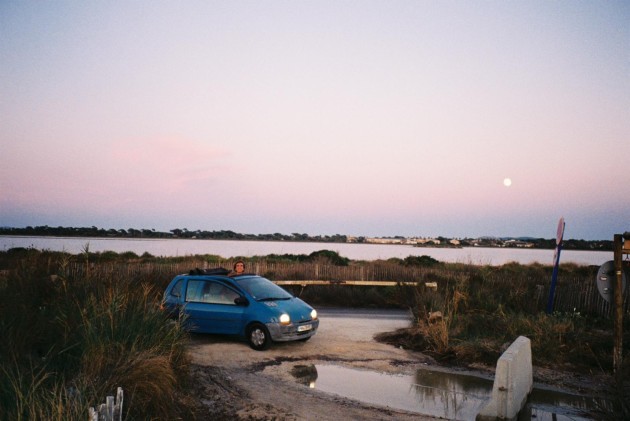
Photo by Naomi Semma • La route du Sel, Hyères 09/2024
How does living in Hyères influence your artistic work? Do you find inspirations there that differ from those in Mexico?
Hyères has transformed my work. Local influences have nourished my mind and broadened my horizons. The light, the sea, the colors... my Mexican identity is reinventing itself, weaving a new story.
Portrait photo by: Naomi Semma
To learn more about Iván Monroy’s work and the traditions of Zapotec pottery, we invite you to discover the documentary Amelia. Directed by Diego Mier y Terán, this film - in which Iván was actively involved - offers a fascinating glimpse into the life of this great master potter and the cultural heritage of the Oaxaca region in Mexico. Although the film is not yet available online, Iván hopes to organize a screening in the South region in 2025. For more information about the film, visit: https://innovandolatradicion.org/tesoros-vivos-de-la-alfareria-amelia/. In the meantime, follow his updates on Instagram: https://instagram.com/ivan.monroy.

Ixtlán de Juárez, Oaxaca. The village of Amelia Aquino.